An Afternoon at Van Fortress
March 4, 2026 · Pera White Concierge · 2 min read
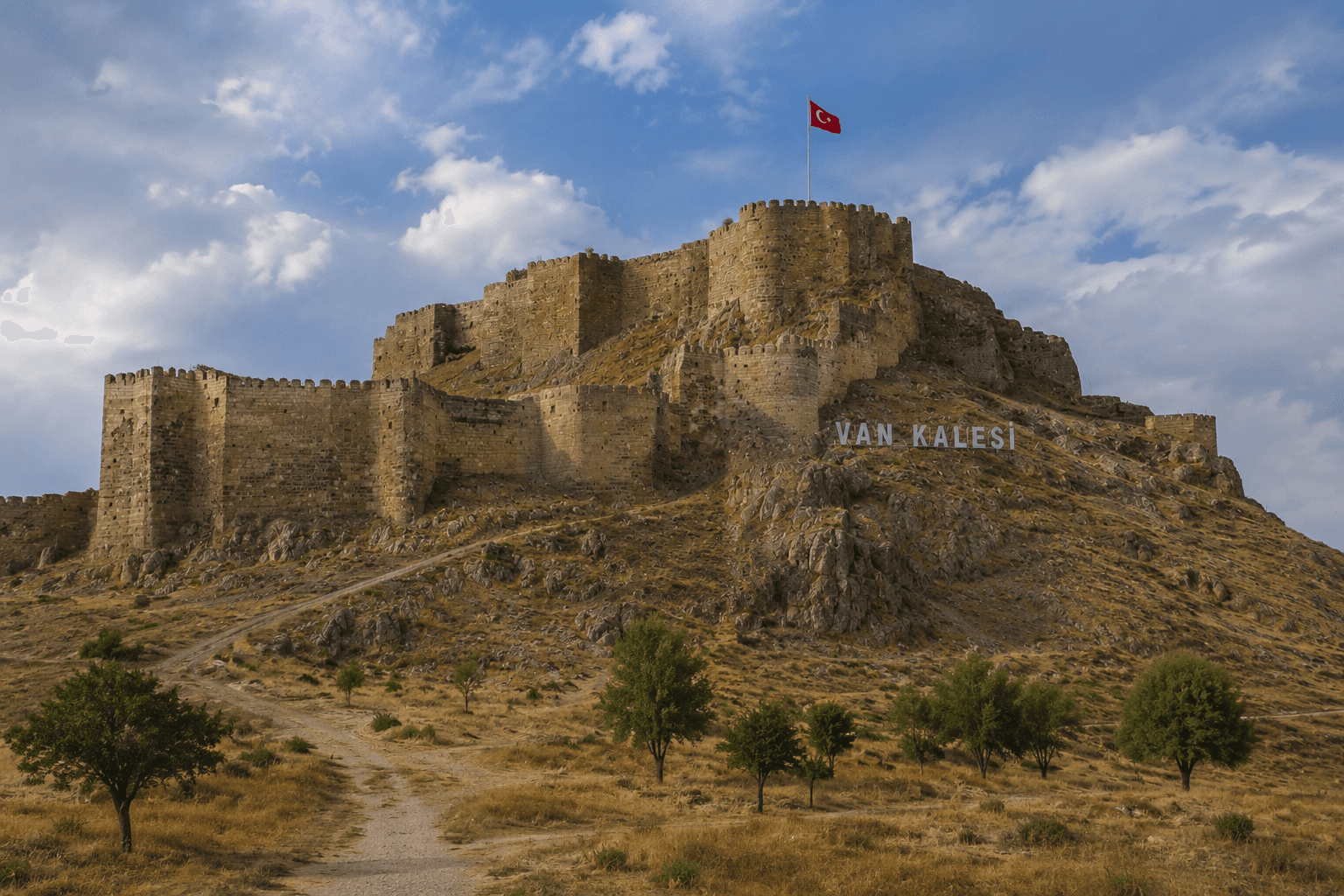
Van Fortress — known locally as Van Kalesi — sits on a limestone ridge at the southern edge of the old city, rising about eighty metres above the plain. It is one of the oldest continuously recognisable fortified sites in Anatolia. Its Urartian name was Tushpa, and it served as the capital of the Urartu kingdom from roughly the ninth to the sixth century BCE. What you walk on today is a long palimpsest — Urartian foundations, Median and Achaemenid additions, Selçuk and Ottoman rebuilds — carrying the marks of every power that held the region.
The rock walls of the citadel are its most extraordinary feature. Urartian kings — Sardur, Argishti, Menua — carved royal inscriptions directly into the cliff face using cuneiform script, listing conquests, dedications, and construction works in a language no one fully decoded until the twentieth century. Near the foot of the fortress, a trilingual inscription commissioned by the Persian king Xerxes I in the fifth century BCE survives in Old Persian, Elamite, and Babylonian cuneiform on a polished rectangle of rock. It is the westernmost major Achaemenid inscription known.
Below the south face of the ridge lies Eski Van — Old Van — a flat plain scattered with the ruins of a once-dense city. It held tens of thousands of residents in the nineteenth century and was largely destroyed in 1915. What remains is foundations, a scattering of minarets, and two restored mosques: the Ulu Cami, with its detached brick minaret, and the smaller Kızıl Cami further north. The site has been left mostly as it was — grass, low walls, and long sight lines where streets used to be.
The fortress is a short drive from the hotel. Plan two to three hours on site: allow forty-five minutes to climb the citadel path, an hour to move slowly through Old Van, and time at the summit for the view. The path is stepped and uneven in places — solid shoes matter more than comfortable ones. There is no shade on the ridge.
Late afternoon is the best light. From the summit, Van Lake spreads out to the west, catching the sun as it drops toward Akdamar. Come down before dusk — the descent is easier in daylight.
Back to blog