The Quiet Art of the Van Kilim
January 14, 2026 · Pera White Concierge · 2 min read
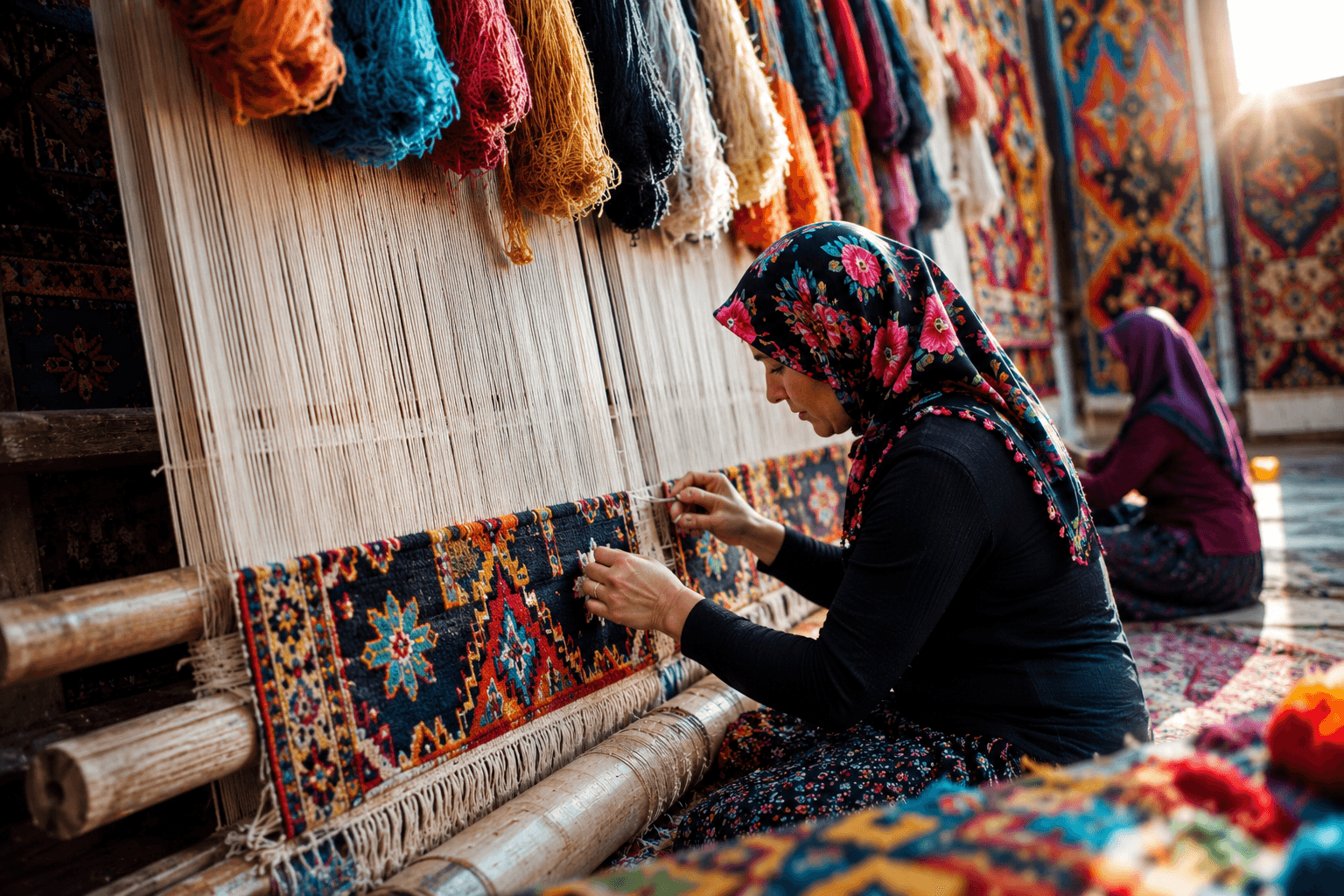
Van kilims — flat-woven rugs without a pile — are among the oldest continuous craft traditions of eastern Anatolia. Their patterns are geometric, bold, and legible: repeating motifs that carry meaning rather than decoration. Rams' horns (koçboynuzu) stand for masculine strength and fertility. The star (yıldız) marks protection and good fortune. The water motif, a running zigzag, signifies continuity and renewal. The evil eye (nazar), stitched in deep blue, wards off harm. Each kilim tells the household it came from — its hopes, its fears, its prayers — in a vocabulary three thousand years old.
The tradition in Van has historically been women's work. Girls learned at their mothers' looms, were expected to weave their own dowry pieces by their early twenties, and carried the visual grammar of the region forward generation by generation. That direct transmission is thinner now. Industrialisation, migration, and synthetic textiles have shrunk the number of active weavers significantly, and most of the kilims sold in Van's tourist markets today are machine-made elsewhere.
The surviving workshops are small and unassuming — a few rooms in the old quarter, a cooperative space supported by local women's associations, a handful of rural ateliers in the villages around the lake. Looms are wood and simple; wool is still hand-dyed in some of them, using madder root for red, walnut husk for brown, indigo for blue. A medium-sized hand-woven kilim represents four to six months of work for a single weaver.
What distinguishes a true hand-woven Van kilim, if you want to buy one: the back should show the same pattern as the front, without visible glue or backing. The wool should feel soft but springy, not slick. Small irregularities in the line of a motif are a sign of the hand, not a flaw. Prices for a genuine piece reflect the months of skilled labour involved — a small runner already commands a premium, and larger or older pieces climb steeply from there.
Our concierge desk keeps a list of trusted workshops that welcome visitors — most will show the loom, explain the motif vocabulary, and offer tea without expecting a purchase.
Back to blog